

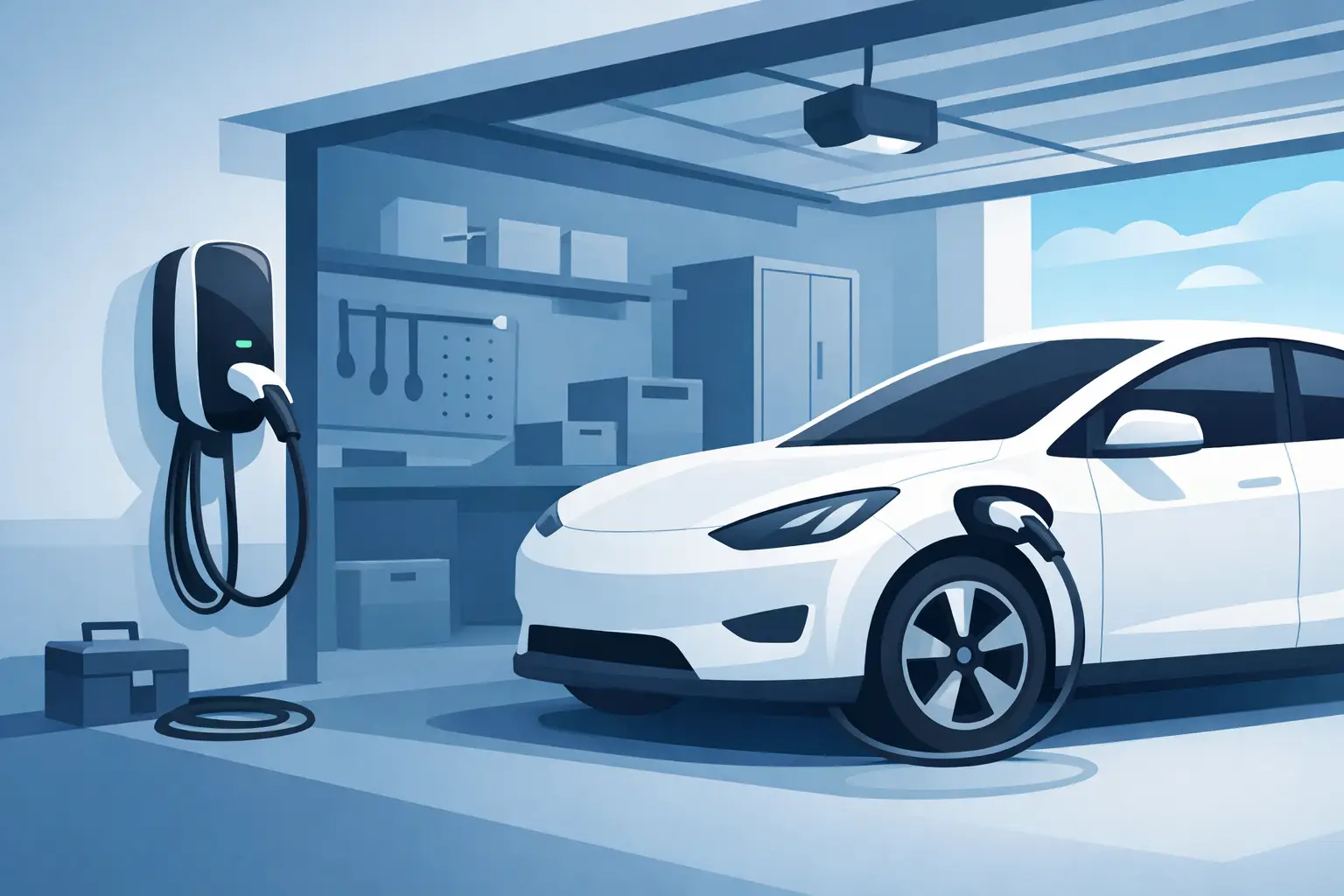
Electric Car Charger Installation in Garage
A garage charger is one of those upgrades that feels optional right up until you start living with an EV. Then the routine changes quickly. Electric car charger installation in garage setups give you reliable overnight charging, less dependence on public stations, and a much more practical way to use your vehicle every day.
For most homeowners, the real question is not whether a charger is worth it. It is whether the garage can support it safely, what the installation will involve, and how to avoid paying for work twice. That is where proper planning matters.
What electric car charger installation in garage work usually involves
A proper installation starts with the electrical system, not the charger box on the wall. A licensed electrician will look at your main panel capacity, the distance between the panel and the garage, the condition of the existing wiring, and whether the charger will be installed indoors or just outside the garage entrance.
In many homes, a Level 2 charger is the best fit. It charges much faster than a standard wall outlet and is usually the reason homeowners move ahead with dedicated EV charging. That said, not every garage is ready for it without changes. Some homes need a new 240V circuit. Others need panel upgrades, load management equipment, or a different routing method for the cable run.
The details matter because EV charging is a continuous electrical load. That means the installation must be sized correctly, protected correctly, and completed to code. Cutting corners here creates nuisance tripping at best and a safety issue at worst.
Choosing the right charger for your garage
The best charger is not always the highest-powered one. It depends on your vehicle, your driving habits, and your home electrical capacity.
A homeowner who drives moderate daily distances may be perfectly well served by a lower-amperage Level 2 charger. Someone with a longer commute, a larger battery, or two EVs in the household may want a higher-capacity unit or a setup designed for future expansion. If the panel is already close to its limit, load-sharing or energy management may make more sense than a major service upgrade.
There is also the question of smart features. Some chargers offer scheduling, energy tracking, app control, and utility rate optimization. Those features can be useful, especially if you want to charge during off-peak periods. But they should not distract from the basics - correct electrical sizing, proper breaker protection, and installation in the right location.
Hardwired or plug-in
This choice comes up often. A hardwired charger is permanently connected and generally offers a cleaner, more secure installation. It can also be the better option for higher-amperage charging or where local code and manufacturer requirements point in that direction.
A plug-in charger can offer some flexibility, but it still requires a properly installed 240V receptacle and dedicated circuit. It is not automatically simpler or cheaper in every case. The garage layout, the charger model, and the long-term plan for the property all affect which option makes the most sense.
Panel capacity is often the deciding factor
One of the biggest variables in electric car charger installation in garage projects is whether your electrical panel has enough available capacity. Many homeowners assume there is room because the house is running fine today. EV charging changes that calculation.
A charger can add a significant continuous load, especially if you want faster charging speeds. If the panel is already serving electric heating, air conditioning, a hot tub, or other major appliances, capacity can become tight. In that case, the answer may be a load calculation, a panel upgrade, or the use of a load management device that allows the charger to operate without overloading the service.
This is where experience matters. The right electrician will not guess. They will assess the existing service, calculate demand properly, and recommend a solution that is safe and realistic for how the property is actually used.
Older homes need closer attention
In older garages, the issue may not only be panel space. The existing wiring methods, grounding, conduit pathways, and subpanel condition may all need review. Detached garages can be especially variable. Some have adequate feeders and subpanels already in place. Others were never intended to carry EV charging loads.
That does not mean installation is difficult by default. It means the scope should be confirmed before anyone starts quoting a simple charger install.
Garage location affects the installation cost
Homeowners often ask for a flat price, but charger installation is not one-size-fits-all. The charger itself is only part of the cost. Labour and materials depend heavily on how easy or difficult it is to bring power to the installation point.
If the electrical panel is in the garage and has available capacity, the work can be relatively straightforward. If the panel is in a finished basement on the opposite side of the house, the run may require more labour, more material, and more planning to keep the installation clean. Finished walls, concrete, detached structures, and long cable distances can all increase the scope.
Permits and inspections may also be part of the project, depending on the installation details and local requirements. That is not a complication to avoid. It is part of doing the job properly.
Safety and code compliance are not optional
A garage is not the place for improvised electrical work. EV chargers draw meaningful current for extended periods, and the installation has to reflect that.
That means correct breaker sizing, proper conductor sizing, suitable mounting height, appropriate environmental protection, and clear attention to the manufacturer instructions. In some cases, GFCI considerations, ventilation conditions, or physical protection from vehicle impact may also come into play. The right installation is not just about getting the charger to turn on. It is about making sure it performs safely over time.
For homeowners and property managers, licensed work also protects the property from another angle. If electrical work is done incorrectly, it can create issues during insurance claims, future renovations, or property sales. Professional installation keeps the upgrade legitimate and documented.
When to install a charger during other electrical work
If you are already planning a panel upgrade, generator work, or broader electrical improvements, that is often the best time to think about EV charging. Combining projects can reduce duplicate labour and make it easier to plan capacity correctly from the start.
This is especially relevant in homes where electrical demand is rising across the board. A property that now includes electric heating equipment, backup power planning, or multiple modern appliances may need a broader electrical strategy rather than isolated upgrades done one by one.
That is often the difference between a charger install that simply works today and one that still fits the property well in five or ten years.
What homeowners should expect from the process
A professional charger installation should begin with a site assessment and a clear quote. You should know what charger type is being installed, what electrical work is required, whether the panel can support it as-is, and whether permits are needed.
From there, the work itself is usually straightforward when properly planned. The charger location is confirmed, the circuit is installed, the equipment is mounted, connections are completed, and testing is done before handoff. A good electrician will also explain how the charger is used, what charging rate to expect, and any limits or operating considerations tied to your system.
For homes in Montreal's West Island and surrounding areas, winter is another practical factor. A garage charger is not just about convenience. It means you start the day with dependable charging at home instead of relying on outdoor public infrastructure in cold weather.
A smart upgrade when it is done right
Electric car charger installation in garage projects are not complicated for the sake of being complicated. They are simply electrical upgrades that need to be assessed properly, sized properly, and completed to code. The right setup should match your vehicle, your home, and your daily use - not just the highest charging number on a product sheet.
If you are planning the work, the safest move is to treat it like any other serious electrical addition. Get the garage and panel evaluated first, understand the real scope, and choose a solution built for reliable everyday use. Pine Electrique approaches EV charger installations that way because it is the most practical way to protect the property, the equipment, and your peace of mind.


