

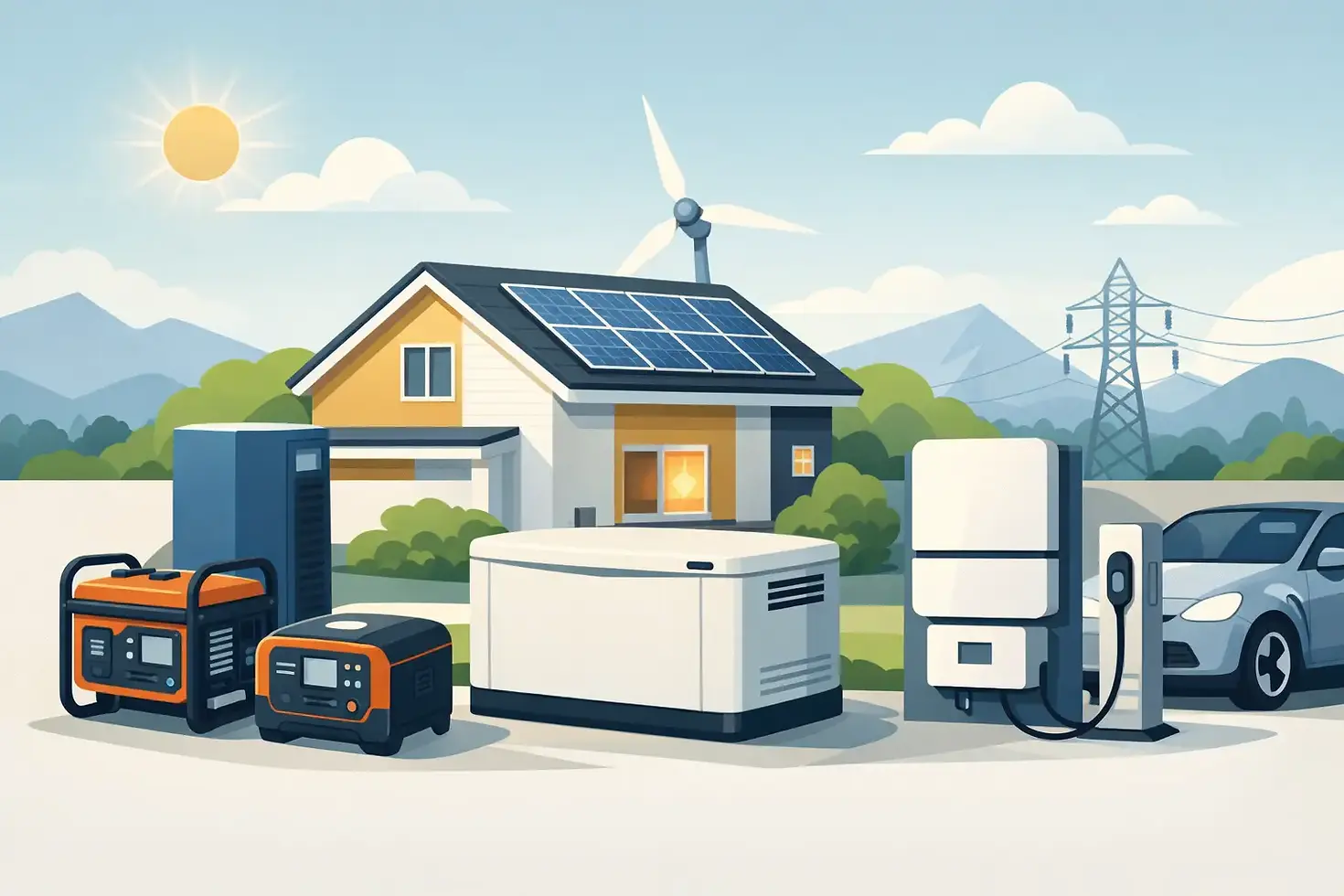
7 Best Backup Power Options for Homes
A power outage usually answers one question fast: what do you actually need to keep running? For some homes, it is the sump pump, fridge, heating system, and a few lights. For others, it is full-home comfort with no interruption to work, security, or daily routines. The best backup power options for homes depend on how much power you need, how often outages happen, your fuel preferences, and how much complexity you are willing to manage.
This is where many homeowners get stuck. A backup system can look straightforward on paper, but the right choice has to match your electrical load, your panel setup, local code requirements, and the way your household uses power in real life. A cheaper option that does not cover the right circuits can feel like a poor investment. A larger system than you need can be costly to buy, install, and maintain.
What makes the best backup power options for homes?
The right system is not always the largest one. It is the one that supports the loads that matter most, starts safely, transfers power correctly, and stays reliable over time.
Most homeowners are balancing five factors. The first is runtime - how long the system can support essential loads. The second is power capacity - whether it can handle startup surges from equipment like sump pumps, refrigerators, and HVAC systems. The third is fuel or energy source. The fourth is maintenance. The fifth is installation quality, because even excellent equipment performs poorly if the electrical work is not done correctly.
If you live in an area where winter storms can interrupt heating or where sump pumps protect finished basements, backup power moves from convenience to risk management. That is especially true when outages last longer than a few hours.
Standby generators
For many households, a standby generator is the most dependable answer. It sits outside the home, connects permanently to the electrical system, and starts automatically when utility power fails. If your goal is minimal interruption, this is usually the benchmark option.
Standby units commonly run on natural gas or propane. Natural gas is attractive where utility service is reliable because there is no need to refuel during an outage. Propane can also work very well, but runtime depends on tank size and refill logistics.
The major advantage is automation. A properly installed standby generator works with an automatic transfer switch, which isolates your home from the grid and restores selected circuits or the full service safely. That matters because backfeeding power into utility lines is dangerous and prohibited.
The trade-off is cost. Standby generators require professional installation, fuel supply coordination, electrical integration, permitting, and ongoing maintenance. They are not the lowest-cost entry point, but for homeowners who want heating, refrigeration, lighting, pumps, and key appliances protected without setup each time, they are often the strongest long-term choice.
Best fit for standby generators
This option makes sense for larger homes, families who want automatic backup, and properties with critical electrical loads. It is also a practical choice for homeowners who travel often and cannot be home to set up a portable solution during an outage.
Portable generators
Portable generators remain popular because they cost less upfront and can cover essential loads when paired with the right setup. They are especially useful for homeowners who want backup power for short outages but are not ready to invest in a permanent standby system.
That said, there is a big difference between owning a portable generator and having a safe, code-compliant way to use it. Extension cords through doors and windows may seem like a simple workaround, but they are inconvenient and can create safety issues. A better approach is a professionally installed transfer switch or interlock system designed for the generator and the home’s electrical panel.
Portable generators usually run on gasoline, propane, or dual-fuel configurations. Gasoline is easy to find in normal conditions but less convenient during extended outages, especially in severe weather. Propane stores better over time, though it may produce lower output depending on the unit.
Noise, manual startup, outdoor placement, and fueling are the main trade-offs. You also need to think realistically about winter use. If the power goes out during freezing rain at night, are you comfortable moving the generator into position, connecting it correctly, and managing fuel safely?
Home battery backup systems
Battery backup has gained attention for good reason. These systems are quiet, clean, and immediate. They can power selected circuits without combustion, and they pair well with solar installations where available.
For short outages or lower-load homes, batteries can be an excellent option. They are ideal for lighting, internet, refrigeration, electronics, and some plug loads. Where they become more complicated is with heavy electrical demand. Electric heating, central air conditioning, electric water heating, and large cooking appliances can drain battery capacity quickly unless the system is sized aggressively, which increases cost.
Battery systems appeal to homeowners who want silent operation and low routine maintenance. They also avoid fuel storage concerns. But batteries are not automatically the best solution for every property. In colder climates, and in homes with significant winter heating loads, a battery-only design may not provide the runtime many households expect unless the system is carefully engineered.
Best fit for battery backup
Battery backup works well for owners who want clean power for essentials, have relatively modest outage needs, or are already planning broader energy upgrades. It is often strongest when focused on selected circuits instead of whole-home coverage.
Solar plus battery systems
Solar alone does not usually keep a home running during an outage. Many people are surprised by that. Most grid-tied solar systems shut down when utility power fails unless they are designed with backup capability and battery storage.
A solar-plus-battery setup can extend backup runtime and reduce dependence on fuel, but its performance depends on season, weather, panel production, battery size, and what loads are being served. In summer, the system may recharge effectively during the day. In winter, shorter daylight hours and snow coverage can limit output when you need it most.
This is a strong option for homeowners thinking beyond outage protection and looking at long-term energy strategy. But as pure outage insurance, it often costs more than a generator-based approach. The value improves when the homeowner also benefits from daily energy management and self-consumption.
Inverter generators
An inverter generator is a subtype of portable generator, but it deserves separate consideration. These units produce cleaner power, are often quieter, and tend to be more suitable for electronics and sensitive devices.
They are a smart fit for smaller backup needs, such as keeping refrigeration, charging devices, powering lights, and supporting internet equipment. Some models can be paired for more output, but they are generally not the first choice for running multiple large household loads.
Their strength is efficiency and lower noise. Their weakness is capacity. If your goal is to carry major mechanical systems, a standard portable or standby generator may be more appropriate.
Temporary power stations
Portable power stations, essentially large battery packs with outlets, have become more capable in recent years. For a condo, a small home office, or short disruptions, they can be useful. They are easy to store, simple to operate, and suitable for charging phones, running modems, or keeping a few devices alive.
For full-house resiliency, though, they are limited. They do not replace a generator or a properly integrated home battery system. Think of them as convenience tools, not infrastructure.
How to choose between the best backup power options for homes
Start with your critical loads, not the product category. If you want to run a furnace, sump pump, fridge, freezer, some lighting, garage door opener, and internet, your electrical demand will look very different from a home that also wants central AC, electric range service, and full-panel backup.
Then consider outage duration. If outages are rare and short, a portable generator or modest battery setup may be enough. If outages are longer or more disruptive, a standby generator becomes easier to justify.
Fuel availability matters too. Natural gas offers convenience where service is dependable. Propane gives flexibility but needs proper storage planning. Batteries avoid fuel entirely, but they require disciplined load management unless the system is generously sized.
The final step is installation quality. Transfer equipment, load calculations, panel compatibility, grounding, ventilation clearances, and code compliance are not details to sort out later. They are the project. A backup system only performs as intended when the electrical design and installation are done correctly from the start.
For homeowners in Montreal’s West Island and nearby areas, winter reliability should be part of the decision, not an afterthought. Heating equipment, water management, and safe transfer to backup power are too important to leave to guesswork. That is why many property owners work with a certified master electrician such as Pine Electrique when planning generator or backup power installations.
A good backup power system should feel boring once it is in place. It should start when needed, support the right loads, and do its job safely without turning every outage into a project. If you choose with your actual household needs in mind, that is exactly what it can do.


